Becoming an IAS officer is a dream for millions of young Indians.
Every year, lakhs of candidates appear for the UPSC Civil Services Examination, competing for a limited number of positions in the Indian Administrative Service. For many aspirants, clearing the examination and entering the IAS represents the culmination of years of preparation, sacrifice and uncertainty.
But what happens when someone who has already achieved that dream decides to walk away?
Over the years, several IAS officers have resigned from the service before retirement. Their reasons have been very different. Some moved into politics. Some chose entrepreneurship. Others resigned after expressing strong concerns about governance, democracy or freedom of expression. Some opted for voluntary retirement instead of formally resigning.
The latest name to attract national attention is Divya Mittal, a 2013-batch Uttar Pradesh cadre officer who announced her resignation in August 2026 after 13 years in the civil services. The Indian Express reported on Divya Mittal's resignation
Her decision has once again triggered a larger question:
Why would an IAS officer leave one of India's most prestigious and secure careers?
The answer becomes clearer when the stories of different officers are examined individually.
Several IAS officers have left the civil services before retirement for very different reasons.
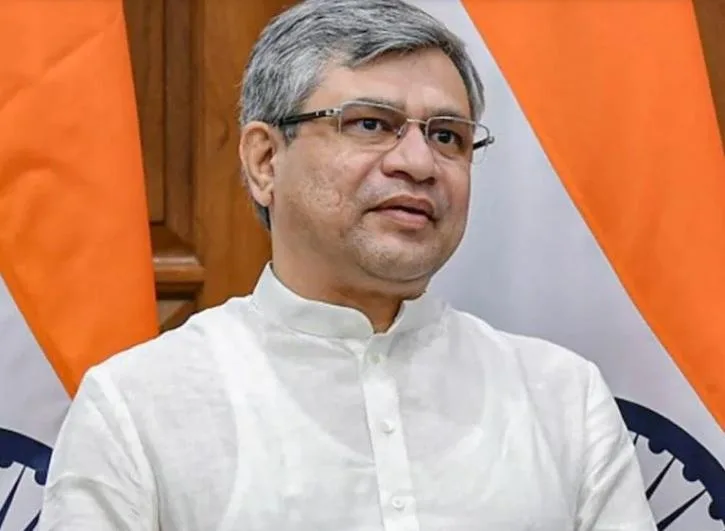
Roman Saini moved into education entrepreneurship and became a co-founder of Unacademy. Ashwini Vaishnaw moved from the IAS to the corporate sector and eventually entered politics, becoming a Union Minister. O.P. Choudhary resigned and entered electoral politics. Shah Faesal resigned, entered politics and later returned to the IAS. Kannan Gopinathan and S. Sasikanth Senthil resigned after publicly expressing concerns about governance and democracy.
Other officers, including Kashish Mittal and Syed Sabahat Azim, followed very different paths outside government.
It is important to note that not every IAS officer who leaves before retirement has resigned. Some leave through voluntary retirement (VRS), while in some cases a resignation may remain pending or may later be withdrawn.
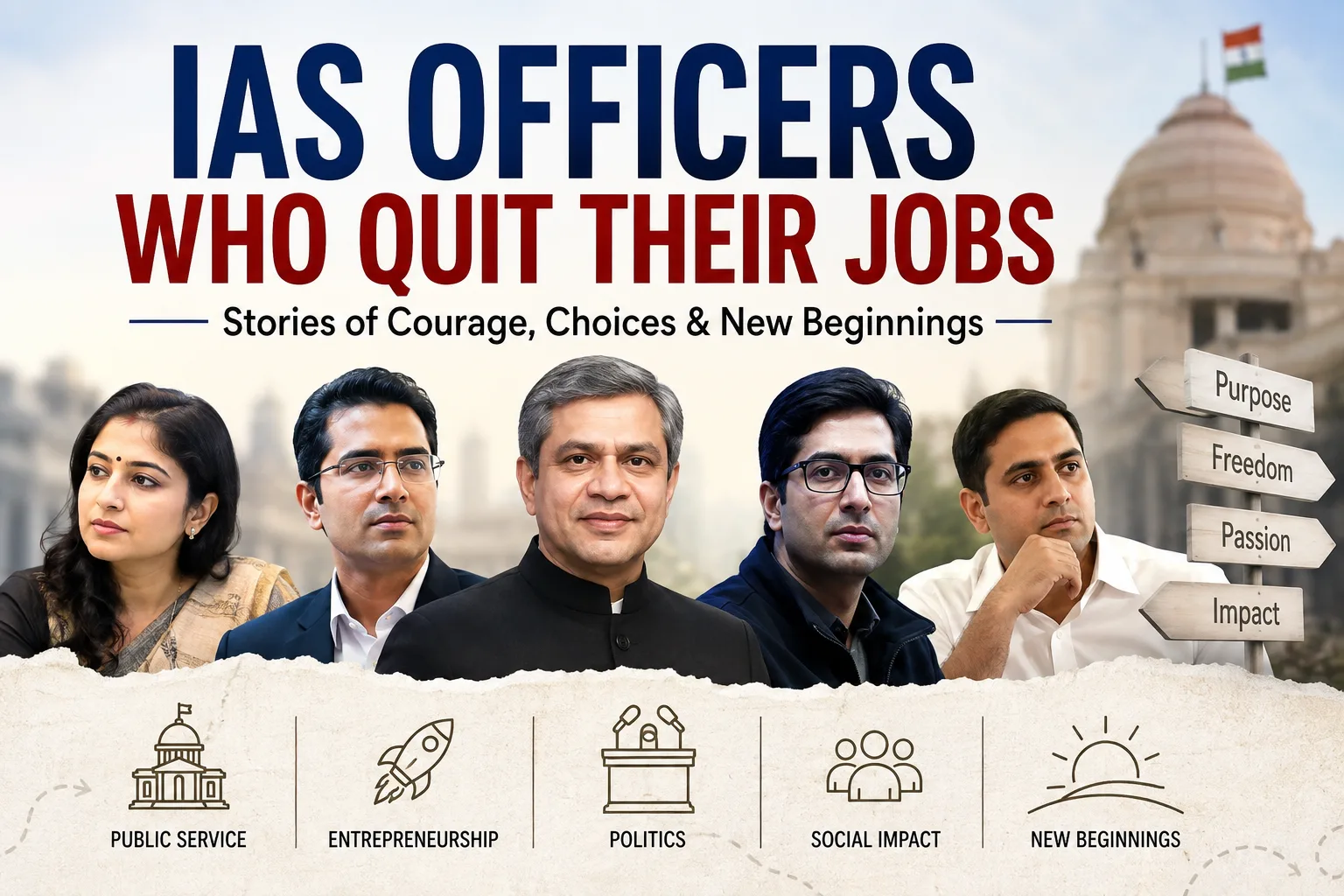
IAS Officers Who Quit Their Jobs: The Notable Names
IAS Officer
What happened after leaving?
Main reason or career direction
Divya Mittal
Next career phase developing
Personal priorities and aspirations
Roman Saini
Co-founded Unacademy
Education and entrepreneurship
Ashwini Vaishnaw
Corporate sector → politics → Union Minister
Career transition
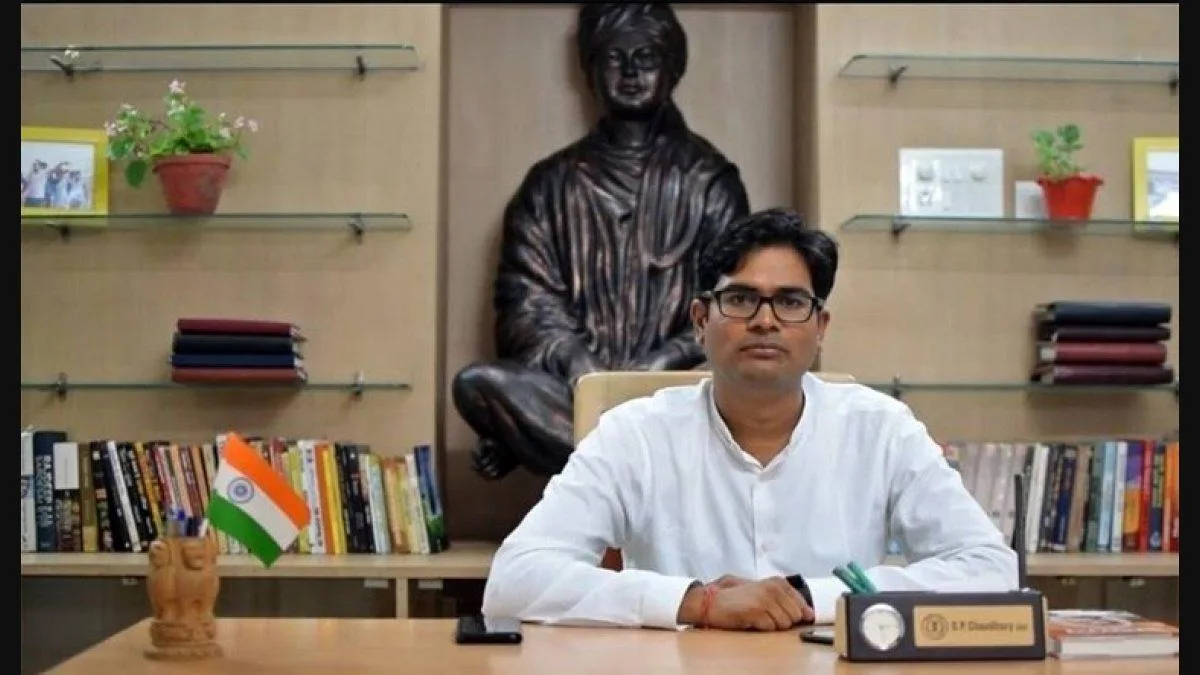
O.P. Choudhary
Entered electoral politics
Politics
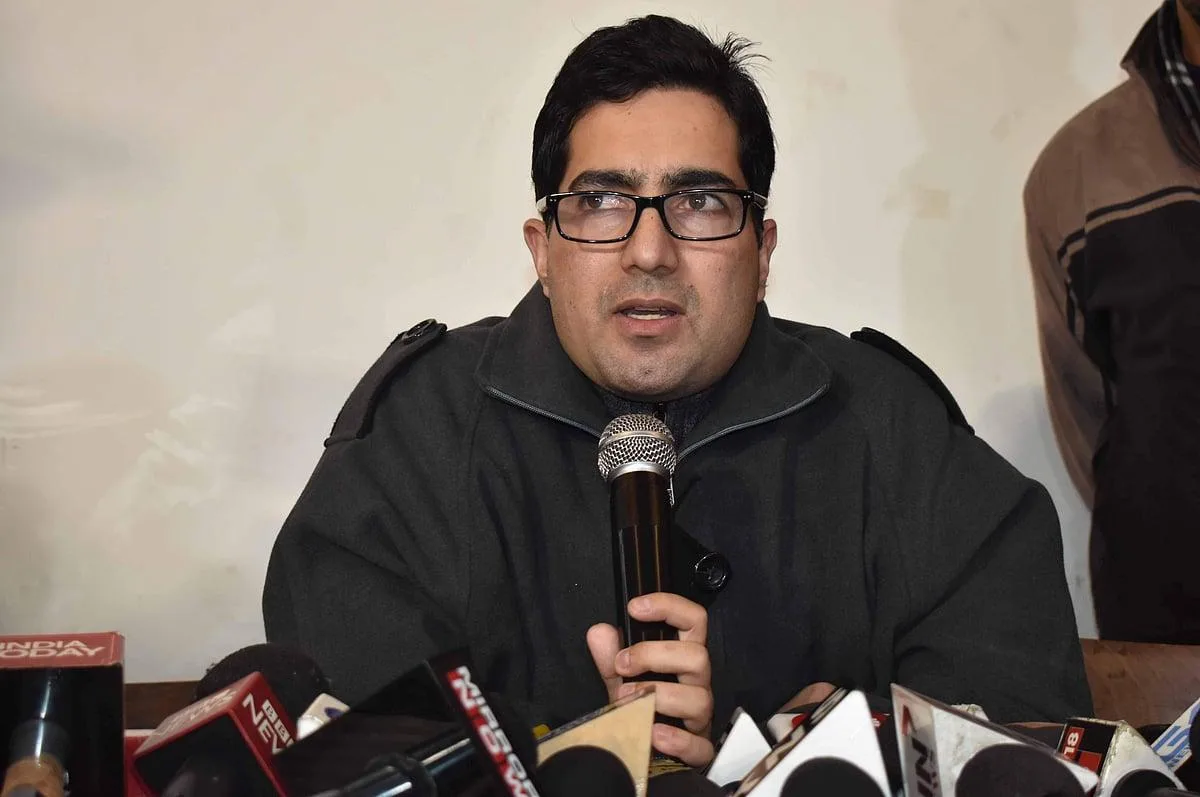
Shah Faesal
Politics → returned to IAS
Kashmir and governance concerns
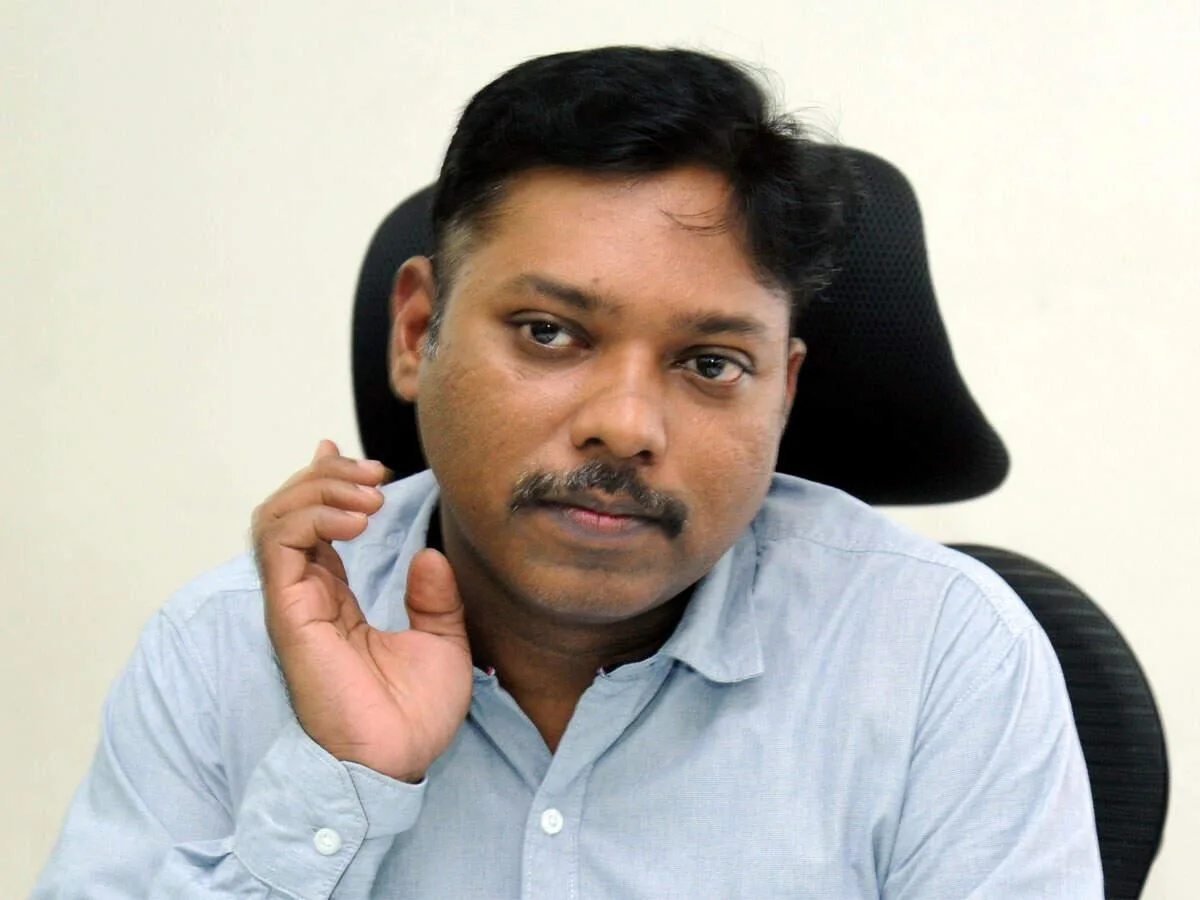
Kannan Gopinathan
Public life
Freedom of expression concerns
S. Sasikanth Senthil
Entered politics
Concerns about democracy
Abhishek Singh
Acting and public life
Career outside administration
Kashish Mittal
Music, technology and entrepreneurship
Personal passion
Syed Sabahat Azim
Healthcare entrepreneurship
Affordable healthcare
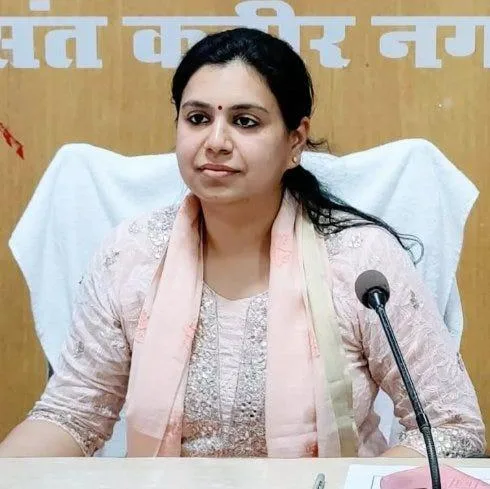
1. Divya Mittal: IAS Officer Who Resigned After 13 Years
The resignation of Divya Mittal has brought the subject of IAS officers quitting the civil services back into the national spotlight.
Divya Mittal, a 2013-batch Uttar Pradesh cadre IAS officer, announced her resignation after 13 years in the civil services.
Mittal is a 2013-batch IAS officer of the Uttar Pradesh cadre who served for approximately 13 years. During her career, she served as District Magistrate of Deoria, Mirzapur and Sant Kabir Nagar, among other assignments. The Indian Express profile of Divya Mittal's IAS career
Before joining the civil services, Mittal studied at IIT Delhi and IIM Bangalore and worked in London. She eventually returned to India and entered the civil services. Hindustan Times: Who is Divya Mittal?
During her administrative career, Mittal became particularly well known for her work in Mirzapur and her direct engagement with people.
In August 2026, she announced that she had voluntarily resigned from the IAS after 13 years.
Her resignation note reflected on her journey in public service and on the aspirations that brought her back to India after working abroad. She did not publicly state a specific official reason for resigning. Hindustan Times report on Divya Mittal's resignation
That distinction is important.
There has been speculation about why she left, but unless Mittal herself or an authoritative source confirms a specific reason, those claims should not be presented as fact.
Her case is particularly interesting because it shows that an IAS resignation does not necessarily have to be triggered by a political controversy or a financial opportunity.
Sometimes an officer simply decides that it is time for a different phase of life.
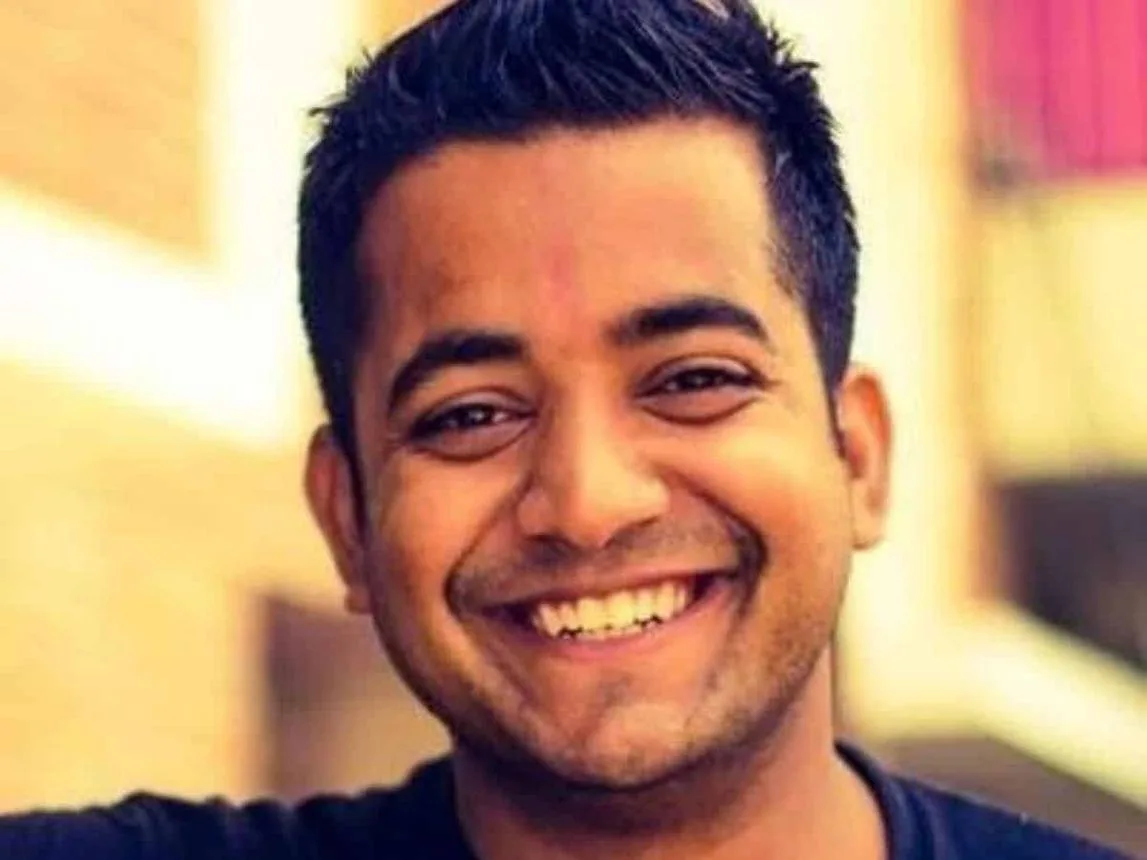
2. Roman Saini: From IAS Officer to Unacademy Co-Founder
If there is one IAS resignation story that particularly fascinates UPSC aspirants, it is that of Roman Saini.
Roman Saini left the IAS and went on to co-found education technology company Unacademy
He cleared the AIIMS entrance examination at 16 and later cleared the UPSC Civil Services Examination at the age of 22. He joined the IAS and served in Madhya Pradesh.
For most people, becoming an IAS officer at such a young age would be a dream career.
For Saini, however, it was not the final destination.
He eventually left the civil services and moved into education entrepreneurship.
Saini became a co-founder of Unacademy, alongside Gaurav Munjal and Himesh Singh.
His story became particularly popular among UPSC aspirants because it demonstrated that someone could spend years preparing for the civil services, clear one of India's toughest examinations and still decide that entrepreneurship was the better career path.
His case is therefore particularly important for anyone asking:
Can an IAS officer simply resign and walk away?
The answer is no—not necessarily.
The resignation must go through the applicable administrative process.
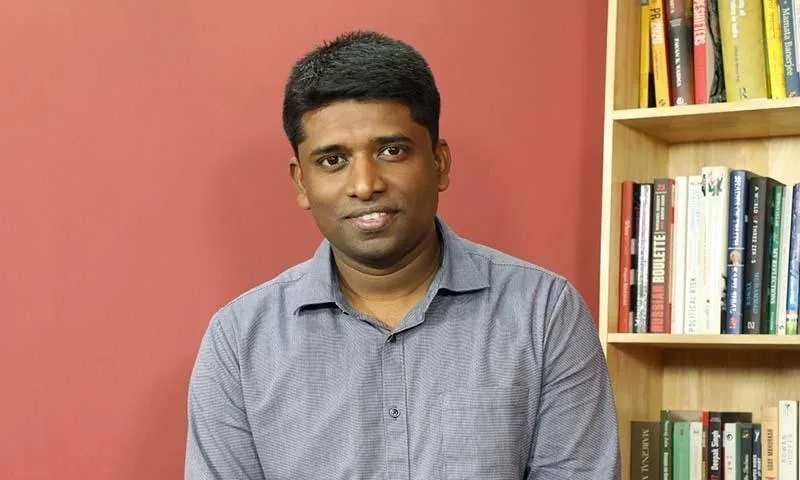
7. S. Sasikanth Senthil: Why He Chose to Leave the IAS
S. Sasikanth Senthil, a 2009-batch Karnataka-cadre IAS officer, resigned in September 2019 while serving as Deputy Commissioner of Dakshina Kannada.
S. Sasikanth Senthil resigned from the IAS in 2019, saying he could not continue as a civil servant amid concerns about democratic institutions.
In his resignation statement, Senthil said that he considered it unethical to continue as a civil servant when he believed the fundamental building blocks of India's democracy were being compromised. The Indian Express report on Sasikanth Senthil's resignation
His resignation came shortly after Kannan Gopinathan's.
The two cases therefore generated considerable discussion about whether civil servants should remain within the system when they strongly disagree with government decisions.
8. Abhishek Singh: From IAS to Acting and Public Life
Abhishek Singh, a 2011-batch Uttar Pradesh-cadre IAS officer, became known outside government circles for his interest in acting and public life.
Abhishek Singh former IAS officer who pursued acting after leaving civil services
He appeared in music videos and entertainment projects while also maintaining a public profile on social media.
Singh submitted his resignation from the IAS in 2023, and it was subsequently accepted by the government.
His career after the IAS has included acting, entertainment and other public-facing activities.
His story is particularly interesting because it represents a move away from conventional government administration into the creative and entertainment space.
9. Kashish Mittal: The IAS Officer Who Chose Music
Kashish Mittal, a 2011-batch AGMUT-cadre IAS officer, resigned from the service in 2019.
Kashish Mittal left the IAS and later pursued his passion for Hindustani classical music.
His resignation initially attracted attention because it came after he was transferred from Delhi to Arunachal Pradesh. The case was later discussed in the context of his desire to pursue other interests, including music. The Indian Express report on IAS resignations and Kashish Mittal
Mittal's story stands out because his alternative career was not simply another government position or a political career.
He had a strong interest in Hindustani classical music.
His journey demonstrates that professional success and personal fulfilment are not always the same thing.
Someone can achieve an extremely prestigious career and still decide that another passion deserves more of their time.
10. Syed Sabahat Azim: From IAS to Affordable Healthcare
Dr Syed Sabahat Azim is another notable example of an IAS officer moving into entrepreneurship.
Syed Sabahat Azim left the IAS and founded Glocal Healthcare to provide affordable healthcare services.
Azim left the IAS and later founded Glocal Healthcare, focusing on affordable healthcare services.
His story has often been associated with a personal experience involving his father's medical treatment, which influenced his decision to work on healthcare accessibility.
His career illustrates another reason an IAS officer might leave:
to build a solution independently rather than administer an existing government system.
Why Do IAS Officers Quit Their Jobs?
There is no single reason why IAS officers resign.
The cases discussed above show several broad patterns.
1. Entrepreneurship
Some officers believe they can create greater impact outside government.
Roman Saini moved into education entrepreneurship.
Syed Sabahat Azim moved into healthcare entrepreneurship.
Ashwini Vaishnaw entered the corporate sector and later entrepreneurship.
2. Politics
Some officers eventually decide that they want to participate directly in political decision-making.
Divya Mittal's 2026 resignation demonstrates another category.
She described her 13-year journey in the IAS and reflected on the aspirations that originally brought her back to India. However, she did not publicly give a specific official reason for her resignation. Hindustan Times report on Divya Mittal's resignation
Therefore, it would be incorrect to attribute her resignation to a specific controversy unless she or an authoritative source confirms it.
5. Pursuing a different passion
Kashish Mittal's story demonstrates that a career in government may not always be someone's ultimate personal ambition.
For some people, music, writing, teaching, research or entrepreneurship may eventually become more important than remaining in a bureaucratic career.
How Many IAS Officers Have Resigned?
Government data cited by The Indian Express showed that 31 IAS officers resigned between 2010 and May 2025.
Submitting a resignation is not automatically the same as completing the exit from the IAS.
Can an IAS Officer Withdraw a Resignation?
Under the applicable All India Services rules, withdrawal of resignation can be permitted in certain circumstances, subject to the prescribed conditions.
The rules specify conditions relating to matters such as the timing of the request, conduct during the intervening period and availability of a suitable post. They also place restrictions on certain situations involving private employment and political activity. All India Services rules on withdrawal of resignation
Shah Faesal's case demonstrates why this distinction matters.
Divya Mittal did not publicly give a specific official reason for her resignation. In her farewell message, she reflected on her 13-year journey, her aspirations and the purpose that originally brought her back to India. Hindustan Times: Divya Mittal resignation
Which IAS officer co-founded Unacademy?
Roman Saini is a former IAS officer who went on to co-found Unacademy, an education technology company.
Which IAS officer became a Union Minister after leaving the IAS?
Which IAS officer resigned over freedom of expression?
Kannan Gopinathan resigned in 2019, saying that he wanted to protest what he described as the denial of freedom of expression to people in Jammu and Kashmir. The Indian Express interview with Kannan Gopinathan
Which IAS officer resigned over concerns about democracy?
S. Sasikanth Senthil, a 2009-batch Karnataka-cadre IAS officer, resigned in September 2019 and said he believed it was unethical for him to continue as a civil servant when he felt the fundamental building blocks of India's democracy were being compromised. The Indian Express report on Sasikanth Senthil's resignation
Which IAS officer left the service to pursue music?
Yes. An IAS officer can submit a resignation before the normal retirement age, but the resignation is subject to the applicable All India Services rules and government acceptance. The Department of Personnel and Training deals with the acceptance of resignation of IAS officers. Department of Personnel and Training: IAS service matters
Is IAS resignation the same as VRS?
No. Resignation and voluntary retirement are different methods of leaving government service, with separate rules and service implications.
Can an IAS officer withdraw a resignation?
In certain circumstances, yes. The applicable All India Services rules contain provisions governing withdrawal of resignation, subject to specified conditions. All India Services rules on withdrawal of resignation
How many IAS officers have resigned?
According to DoPT data cited by The Indian Express, 31 IAS officers resigned between 2010 and May 2025. This figure should not be confused with all officers who left service because voluntary retirement is a separate category. The Indian Express analysis of IAS resignation data
Final Takeaway
The IAS is one of India's most prestigious careers. For millions of aspirants, becoming an IAS officer is the ultimate professional goal.
Yet the stories of officers who left show that prestige, authority and job security do not automatically determine a person's definition of a successful career.
Some officers discovered a stronger calling in entrepreneurship. Some moved into politics. Some wanted to create change outside government. Some followed long-standing personal passions. Others took a stand on issues they believed were more important than their official position.
And some, like Shah Faesal, eventually discovered that leaving was not the end of their relationship with public service.
The recent resignation of Divya Mittal adds another dimension to the conversation. After 13 years in the IAS, she announced that she was moving on from the service while reflecting on the aspirations and experiences that shaped her journey. The Indian Express report on Divya Mittal's resignation
Perhaps, then, the real story behind IAS officers who quit their jobs is not about people abandoning success.
It is about what happens when people who have already achieved one of India's most difficult professional goals decide that they want to define success differently.
The IAS may be a dream for millions. But even after achieving that dream, some people choose to build a different one.
IAS officers quit their jobs for different reasons, including entrepreneurship, politics, personal priorities, creative careers and concerns about governance or democratic institutions. Each case is different, and some officers leave to pursue opportunities outside government while others resign because they no longer want to continue in public service.
Which IAS Officers Have Quit Their Jobs?
Notable IAS officers who have left the service before retirement include Roman Saini, Ashwini Vaishnaw, O.P. Choudhary, Shah Faesal, Kannan Gopinathan, S. Sasikanth Senthil, Abhishek Singh and Divya Mittal. Their reasons and career paths after leaving the IAS have been different.
What Happens Next to Divya Mittal?
Divya Mittal announced her resignation from the IAS in August 2026 after 13 years of service. She has indicated that her next chapter could involve areas such as writing, teaching or social service. Her resignation process and future plans should be distinguished from officers whose resignations have already been formally accepted.
How Many IAS Officers Have Resigned?
Government data obtained through the RTI process and reported by The Indian Express showed that 31 IAS officers had resigned between 2010 and May 2025. This figure refers to resignations and should not be confused with officers who left through voluntary retirement or other forms of service exit.
Resignation vs VRS: Are They the Same?
No. Resignation and voluntary retirement are different forms of leaving government service. An IAS officer may resign before retirement, subject to the applicable rules and acceptance by the competent authority, while voluntary retirement is governed by specific eligibility and notice requirements under the relevant All India Services rules.
Which IAS Officer Co-Founded Unacademy?
Roman Saini, a former IAS officer, co-founded Unacademy after leaving the civil services. He chose to move into education entrepreneurship and became one of the most prominent examples of an IAS officer who left government service to build a career in the private and startup sector.
A polluted river. Plastic bottles floating in the water. Algae covering parts of the river. Garbage accumulating along its banks and ghats. For many people, the sight might have been something to…
Introduction: A State Organized Around Four Shrines There are relatively few places in the world where a modern state's tourism ministry, road-building budget, environmental litigation docket, and…