Some poets are remembered for a particular couplet. Some for a book. And some for the cultural world they created around their poetry.
H. S. Datta, better known as Kanwal Ziai, belongs to that last category.
Born Hardayal Singh Datta on 15 March 1927 in Kanjrur Dattan, Sialkot, Kanwal Ziai went on to become an Urdu poet whose literary journey crossed geography, language and, most remarkably, the divisions created by Partition. He eventually made Dehradun his home and became a familiar figure in the city's literary circles.
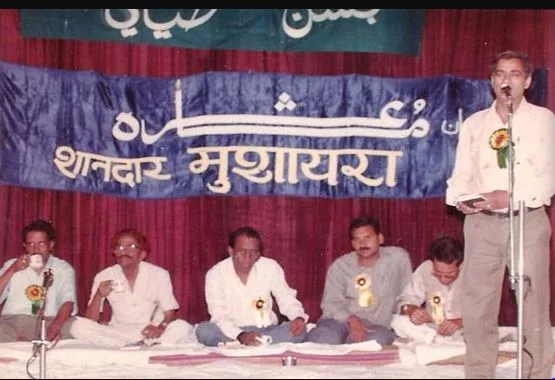
He was a poet of ghazals, a writer, a literary organiser and, for many years, a government employee in the Defence Department. He also served as president of Bazm-e-Jigar and was honoured with the Doon Ratan award by Nagrik Parishad.
But biographies can tell us where a poet lived.
Only poetry can tell us who he really was.
“हमारा ख़ून का रिश्ता है सरहदों का नहीं”
Perhaps the best way to understand Kanwal Ziai is to read him.
In one of his published ghazals, he wrote:
हमारा ख़ून का रिश्ता है सरहदों का नहीं हमारे ख़ून में गंगा भी है चनाब भी है
Hamāra khoon kā rishta hai sarhadon kā nahīñ, Hamāre khoon mein Ganga bhi hai Chenab bhi hai.
“Our bond of blood is not with borders; our blood carries both the Ganga and the Chenab.”
These two lines are extraordinarily powerful when read in the context of his life.
He was born in Sialkot, a city that became part of Pakistan after Partition. He later lived in India and eventually settled in Dehradun.
So when Kanwal Ziai writes about the Ganga and Chenab, he isn't merely creating a poetic image.
He is speaking about a shared civilisation.
About memories that cannot be divided by a line on a map.
About a cultural identity that existed before borders and survived them.
The couplet captures something deeply characteristic of Urdu poetry at its best: politics may create borders, but memory does not always recognise them.
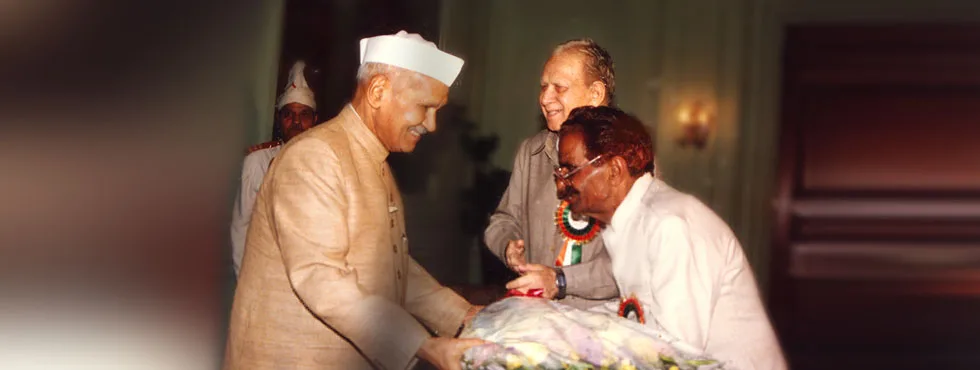
Kanwal Ziai at Raj Bhawan, Uttarakhand
A poet who found light in dark times
Another couplet from the same ghazal reads:
हमारा दौर अंधेरों का दौर है लेकिन हमारे दौर की मुट्ठी में आफ़्ताब भी है
Hamāra daur andheron kā daur hai lekin, Hamāre daur ki mutthi mein āftāb bhi hai.
“Ours may be an age of darkness, but our age also holds the sun in its fist.”
That is Kanwal Ziai at his most optimistic.
He acknowledges darkness but refuses to surrender to it.
There is criticism in his poetry, but not cynicism. There is disappointment, but also the possibility of change.
The “sun in the fist” becomes a beautiful metaphor for hope: even in difficult times, ordinary people possess the ability to create light.
Poetry with a social conscience
His poetry wasn't restricted to romance and conventional ghazal imagery.
Consider these lines:
किसी ग़रीब की रोटी पे अपना नाम न लिख किसी ग़रीब की रोटी में इंक़िलाब भी है
“Do not write your name upon a poor man's bread; within a poor man's bread there is also revolution.”
There is an unmistakable social message here.
The image is simple: bread.
But Ziai transforms it into something much larger.
Bread represents dignity, survival and economic inequality. And when someone controls another person's bread, the poet warns, there is always the possibility of rebellion.
It is the kind of sher that feels surprisingly contemporary.
His questions were never merely questions
Another striking couplet says:
मेरा सवाल कोई आम सा सवाल नहीं मेरा सवाल तेरी बात का जवाब भी है
“My question is not an ordinary question; my question is also the answer to what you have said.”
That is an interesting glimpse into his poetic temperament.
The poet isn't simply asking.
He is challenging.
His question itself becomes an argument.
This is perhaps why his poetry works particularly well when read aloud. The ghazal form gives the lines musicality, but beneath that music lies a sharp observation about society and human behaviour.
Between Ganga and Chenab
For someone born in Sialkot and later associated so closely with Dehradun, the geographical symbolism in his poetry becomes especially poignant.
The Chenab belongs to the landscape of his birthplace.
The Ganga belongs to the landscape of the India in which he eventually made his life.
Between the two rivers lies not merely geography, but history.
Kanwal Ziai's poetry refuses to see that history only through the lens of separation.
Instead, he puts both rivers into the same blood.
That may be one of the most beautiful ways a poet could respond to Partition.
From Sialkot to Dehradun
His own journey was remarkable.
Born in 1927, he belonged to a generation that experienced British India, Partition and the enormous social changes that followed.
He later worked in the Defence Department and retired from government service, while continuing his literary activities. He obtained the Urdu Fazil qualification and became involved with literary organisations.
His books included Pyase Jaam, published in 1973, along with Lafzo Ki Diwar, Kagaz Ka Dhua and Dhoop Ka Safar.
The 1973 publication of Pyase Jaam is particularly interesting because a photograph from the book's release shows Kanwal Ziai with his friend, the celebrated Hindi-film actor Rajendra Kumar. The photograph is dated 18 April 1973.
It provides a small window into the cultural world surrounding him a world in which poets, actors and literary figures interacted naturally.
The Dehradun connection
Eventually, Dehradun became the city with which his later life was closely associated.
He wasn't simply someone who happened to live here.
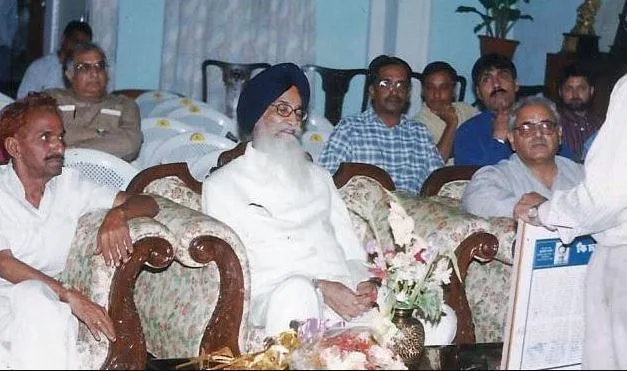
He participated in the city's literary culture and was recognised with the Doon Ratan honour. He also headed Bazm-e-Jigar, connecting him with the wider Urdu literary tradition.
For Dehradun, this makes his legacy particularly valuable.
The city remembers many administrators, soldiers, businessmen, educationists and public figures.
But its literary history is equally important.
And Kanwal Ziai is one of the names that deserves to be brought back into that conversation.
A poet who refused to be confined by identity
Kanwal Ziai was born Hardayal Singh Datta.
Yet literature remembers him as Kanwal Ziai.
He was born into a Hindu family but wrote extensively in Urdu. He also wrote in Hindi. He belonged to the tradition of non-Muslim Urdu poets that includes figures such as Firaq Gorakhpuri, Jagan Nath Azad and Gopal Mittal.
That makes his literary identity particularly significant.
For him, Urdu was not a marker of religious identity.
It was a language of poetry.
A language of emotion.
A language of memory.
And perhaps most importantly, a language capable of connecting people.
The final journey
Kanwal Ziai died in Dehradun on 27 October 2011, according to the biographical sources cited by the major references, although some online records inconsistently list 2012.
He left behind books, ghazals, literary associations and, perhaps most importantly, a body of poetry that still speaks to questions that have not disappeared.
Borders.
Identity.
Poverty.
Hope.
Memory.
Human relationships.
And the possibility of finding light even in dark times.
Why Dehradun should remember Kanwal Ziai
There is a beautiful irony in the story of Kanwal Ziai.
He was born in a place that became separated from India by one of the most consequential borders in modern history.
He eventually found a home in Dehradun.
And in his poetry, he brought the two worlds together.
Ganga and Chenab.
Memory and present.
Hindi and Urdu.
Darkness and sunlight.
Perhaps that is why one of his most memorable lines deserves to be remembered beyond literary gatherings:
हमारे दौर की मुट्ठी में आफ़्ताब भी है।
Our age may be dark—but it still holds the sun.
That could almost serve as Kanwal Ziai's literary epitaph.
Because ultimately, his poetry wasn't only about describing the darkness.
It was about reminding us that we still have the sun.
Frequently asked questions
Who was Kanwal Ziai?
Kanwal Ziai was the literary name of H. S. Datta, an Urdu and Hindi poet born in Sialkot in 1927.
What was Kanwal Ziai's real name?
His birth name was Hardayal Singh Datta, commonly referenced as H. S. Datta.
Where was Kanwal Ziai born?
He was born in Kanjrur Dattan, Sialkot, in present-day Pakistan.
Was Kanwal Ziai a Dehradun poet?
Kanwal Ziai was not originally from Dehradun. He was born in Sialkot and later made Dehradun his home, becoming associated with its literary and cultural life.
What are some books by Kanwal Ziai?
His listed works include Pyase Jaam, Lafzo Ki Diwar, Kagaz Ka Dhua and Dhoop Ka Safar.
What type of poetry did Kanwal Ziai write?
Kanwal Ziai was particularly associated with Urdu ghazals and also wrote in Hindi.
What is Kanwal Ziai known for?
He is remembered for his Urdu and Hindi poetry, literary work, and his connection with the Hindi-Urdu literary tradition.
When was Kanwal Ziai born?
Kanwal Ziai was born on 15 March 1927 in Kanjrur Dattan, Sialkot.
आजकल की दुनिया में डेटा हमारे आसपास हर जगह है, और इसका सही तरीके से इस्तेमाल करना बड़ी चुनौती हो सकती है। हम अक्सर चाहते हैं कि हमें किसी भी विषय पर सबसे सटीक और गहरी जानकारी आसानी से मिल जाए। यही…
मौनी अमावस्या के अमृत स्नान के दौरान प्रयागराज महाकुंभ में बुधवार करीब 1-2 बजे भगदड़ मच गई थी। इस हादसे में करीब 30 लोगों की मौत हो गई थी और 60 लोग गंभीर रूप से घायल हो गए थे। डीआईजी महाकुंभ वैभव…
प्रयागराज के दूसरे अमृत स्नान मौनी अमावस्या के मौके पर महाकुंभ में भारी भीड़ उमड़ी, जिससे भगदड़ मच गई। इस घटना में दर्जनों श्रद्धालु घायल हो गए और कई परिवार एक-दूसरे से बिछड़ गए। घटना में कई लोगों की…